






Once the furnace starts running, you notice a static shock every time you touch a doorknob, your lips and the skin on your knuckles crack, and small gaps open up in the wood trim and floorboards. Nothing is broken, but the house feels uncomfortable. Left alone through a whole winter, chronically dry air can shrink and split wood finishes, and this guide walks you through why it happens and how to fix it.
Your house feels dry in winter for one main reason: cold outdoor air holds very little moisture, and when your furnace heats that air the relative humidity drops further, and can fall into the 20s during a cold snap. The fix is to add moisture back to a target of roughly 30 to 50 percent, using portable humidifiers for a room or a whole-house humidifier plumbed into the duct system, after first sealing the obvious leaks that pull dry outdoor air in. Done right, static and dry skin ease within a few days, and gaps in wood trim close over the following weeks.
Why Does Running the Heat Make the Air So Dry?
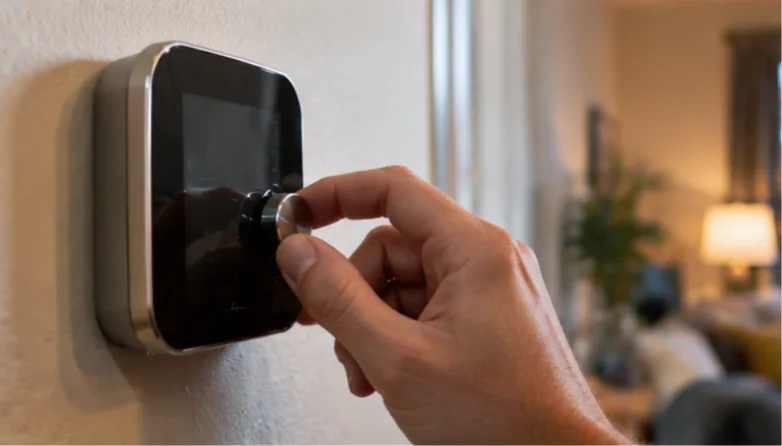
Air holds only so much water vapor, and colder air holds less. When your furnace warms cold outdoor air to indoor temperature, the water content stays the same but the air's capacity jumps, so relative humidity falls. A standard furnace or heat pump adds no moisture, which is why heated winter air feels parched.
Cold, damp-feeling outdoor air turns dry the instant it is heated. Air that feels humid on a cold morning can drop to roughly 20 percent relative humidity once your furnace warms it with no moisture added. That is before cooking and showers add any back, but it shows why the air gets so thirsty.
This is why the north metro Atlanta heating season fools people. Winter here is mild, but cold snaps dropping morning temperatures into the 20s and 30s cut outdoor moisture sharply. Dry-air complaints spike for a few days, then ease when it warms. That pattern tells you the fix is seasonal, not year-round.
What Are the Signs Your Indoor Air Is Too Dry?
Homeowners usually arrive at dry air through its symptoms, not a humidity reading. The clue that they all share one cause is their timing: they appear together once the heat starts running and fade when it warms up. If you are chasing them as separate problems, you are solving one thing in four places.
Watch for these signs that indoor humidity has dropped too far:
- Static shocks: You get zapped touching doorknobs, light switches or another person.
- Cracked skin and lips: Hands, knuckles and lips dry and split despite lotion.
- Shrinking wood trim and floors: Small gaps open in baseboards, molding and hardwood seams.
- Sore throat or dry nose in the morning: You wake up parched after a night with the heat on.
- Lingering dust and static cling: Fabrics cling and fine dust stays airborne longer.
When these show up together during the first real cold spell, you are not looking at several faults. You are looking at one measurable condition with one target to aim for, which is where the next section helps.
What Is the Ideal Indoor Humidity in Winter?
Aim for roughly 30 to 50 percent relative humidity through the heating season. That band is where most people stop noticing the air entirely: the static stops, skin settles, and wood holds its shape. It is a working range, not a single magic number, and the right spot inside it depends on how cold it is outside and how your windows behave.
Below about 30 percent is where the trouble you are feeling sets in. Static shocks, cracked skin and shrinking trim all tend to begin once relative humidity slips under that threshold, and the lower it goes the sharper the discomfort. During a hard cold snap an unhumidified house can sit well below that, which is why the symptoms cluster into a few days rather than spreading evenly across winter.
The upper edge matters too, and it is easy to overshoot. Push humidity too high in cold weather and the moisture finds the coldest surfaces in the house, usually your windows, and condenses. When it is below freezing outside, aim for the lower end of the range. A good first move is simply to measure where you actually sit, because the fix depends entirely on how far below the target you are.
Do Air Leaks and Leaky Ducts Make Dry Air Worse?
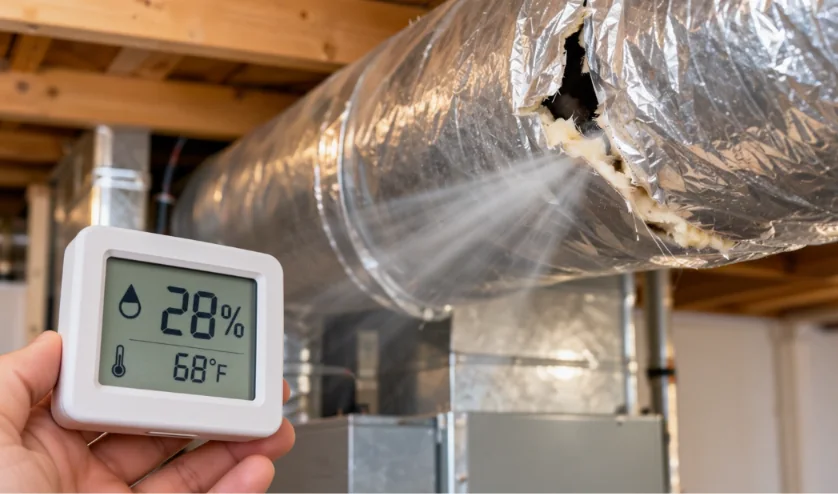
Yes, and often more than the furnace does. Every cubic foot of warm, moister indoor air that escapes through gaps around windows, doors, recessed lights and attic penetrations is replaced by cold, bone-dry outdoor air that your furnace then heats and dries further. A leaky house is constantly swapping the moisture you have for air that has almost none.
Leaky ductwork compounds it. Ducts running through an attic or crawlspace that are not sealed can pull in unconditioned air and push conditioned air where you cannot use it, which drags more outdoor air into the living space.
Older homes here with original duct runs and loose envelopes draw in noticeably more dry air during a cold snap, so sealing the ductwork frequently raises indoor humidity on its own. Weatherstripping doors and caulking window gaps are simple homeowner steps that help too.
That is why sealing comes before equipment. A whole-house humidifier sized for a drafty house has to fight a constant inflow of dry air, which means it runs harder and is easier to oversize. Tighten the house first, measure again, and you may need less humidification than you thought, or none in a mild winter.
How Do You Add Humidity Back Without Causing New Problems?
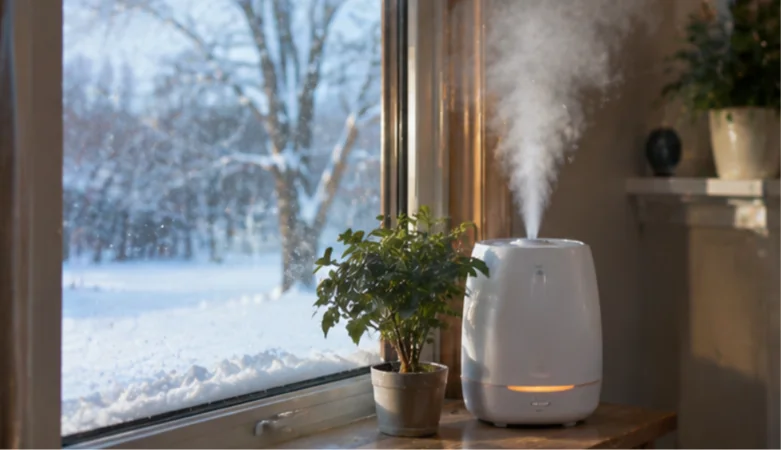
After reducing excess air leakage, you can address indoor dryness by adding moisture in a controlled way. A whole-home humidifier can help maintain more consistent humidity throughout the house, but the setting matters. Keeping humidity at an appropriate level helps relieve dry-air discomfort while limiting condensation on windows, walls, and other cold surfaces.
Measuring What You Actually Have
Start with an inexpensive hygrometer, which reads relative humidity for a few dollars. Put it in a main living area, away from the kitchen and bathrooms, and check it over several cold days. One reading during a mild spell tells you little; a trend across a cold snap tells you how far below 30 percent the house actually falls and whether you need equipment at all.
Portable Humidifiers and What They Can Cover
A portable humidifier handles one room well, which makes it a sound choice for a bedroom or a nursery. Its limit is reach: it adds moisture to the air immediately around it, and the rest of the house keeps pulling that moisture away. Expect to refill the tank daily and to clean it often, since standing water grows biofilm that then gets misted into the room. Use distilled water in ultrasonic models to avoid white mineral dust, and choose cool-mist units around children, since warm-mist units can cause burns.
Whole-House Humidifiers on the Duct System
A whole-house humidifier mounts on the ductwork at your furnace and adds moisture to the air the system already moves, so it treats the whole home at once. It connects to a water supply line, usually needs a drain, and runs mostly when the furnace does.
For a larger home or several dry rooms, this is the option that holds a target, and professional whole-home humidifier installation sizes it to the house instead of guessing.
Watching for Condensation and Overshoot
The failure mode is too much moisture, not too little. In a cold snap, even 40 to 45 percent can fog older windows, and higher levels can condense inside wall cavities and anywhere a surface runs cold. Many humidistats lower the target automatically as the outdoor temperature drops. If you see fog or beads on the lower corners of your windows on a cold morning, the setting is too high and should come down before that moisture feeds anything behind the walls.
Portable or Whole-House: Which Fits Your Home?
The choice comes down to how much of the house is dry, how large it is, and how much daily effort you want to spend. One or two dry rooms point toward portables; a whole house that drops below 30 percent in every room points toward a duct-mounted unit. Measuring first keeps you from buying more equipment than the house needs.
| Factor | Portable humidifier | Whole-house humidifier | Why it decides |
|---|---|---|---|
| Area covered | One room near the unit | Whole home through ducts | Static and dry trim are usually house-wide, not one room |
| Daily effort | Refill and clean often | Mostly automatic | Standing water left dirty gets misted into the air |
| Best fit | Bedroom, nursery, small home | Larger or multi-room homes | Matching the tool to the dry area avoids wasted spend |
| Control | Manual on/off | Humidistat holds a target | A set target prevents overshoot and condensation |
Checking the humidity, the ductwork and the equipment first, then separating what needs attention now from what can wait, means equipment gets sized to the house instead of to a sales target. That order keeps you from installing a whole-house unit a tighter home barely needs.
Why Choose Innovative Mechanical, LLC for Indoor Air Quality in Marietta?
If the static shocks and cracked trim return with every cold snap, the useful next step is a check, not a purchase, so you learn whether duct sealing, a portable unit or a whole-house humidifier is the right answer for your home. Innovative Mechanical, LLC is based in Marietta and installs whole-home humidifiers for homeowners across Cobb, Cherokee, North Fulton, Paulding, Bartow and North DeKalb counties. Our NATE-certified, EPA 608-certified technicians look at your humidity, ductwork and equipment and show you what they find before any equipment is chosen.
Every installation, humidifiers included, is backed by our lifetime craftsmanship warranty for as long as you own the home, and we never make a repair without going over it with you and getting your approval first. To have your humidity, ductwork and equipment checked before the next cold snap, send us a message or call Innovative Mechanical at 770.726.7407.
Frequently Asked Questions
How often should a whole-house humidifier be serviced?
Check your whole-house humidifier at the start of each heating season. Inspect the water panel or pad for mineral buildup, replace it when needed, and clean the unit according to the manufacturer's instructions. Turn it off when heating season ends to prevent unnecessary operation.
Can houseplants or bowls of water fix dry indoor air?
Houseplants and bowls of water release some moisture, but they usually cannot raise humidity enough to make a noticeable difference throughout your home. If your hygrometer consistently shows readings below 30 percent during winter, consider a properly sized humidifier instead.
Does a furnace cause the air in my house to become dry?
A standard furnace does not remove moisture from indoor air. However, heating cold outdoor air that enters through gaps and leaks lowers its relative humidity. This is why dry skin, static electricity, and irritated sinuses often become more noticeable when your furnace runs during winter.
Can a whole-house humidifier cause mold or condensation?
Yes, excessive humidity can create conditions for condensation and mold growth, especially around cold windows and poorly insulated surfaces. A humidifier should be properly sized and controlled with a humidistat. Monitor indoor humidity and adjust the setting based on outdoor temperatures and signs of moisture.
Does a heat pump dry out the air more than a furnace?
No. Neither a heat pump nor a furnace removes moisture in heating mode. The dryness comes from cold outdoor air leaking in and being warmed. A heat pump delivers milder air over longer cycles, so it can feel less parched near the vents, but at the same indoor temperature the relative humidity is the same either way.
Keep reading
Guides and Honest Opinions

Should I Repair or Replace My Furnace?
Home Blog Should I Repair or Replace My Furnace? Go Should I Repair or Replace My Furnace? You turn the heat on for the first time all season, something is off, and a technician hands you a repair quote on a furnace that is already 15 or more years old. Spending the money might buy […]
Read the guide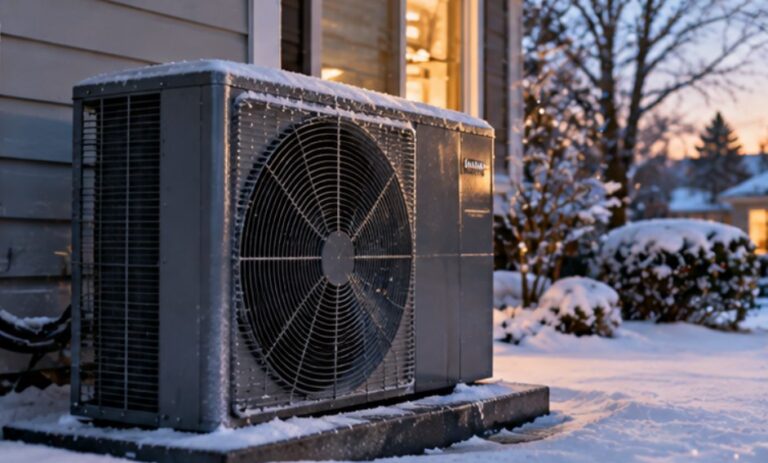
Why Is My Heat Pump Running Nonstop When It's Cold?
Home Blog Why Is My Heat Pump Running Nonstop When It’s Cold? Go Why Is My Heat Pump Running Nonstop When It's Cold? Your heat pump has been running since early morning, but it barely seems to shut off. If you live in Marietta, GA, this can happen when a winter cold front pushes temperatures […]
Read the guide
Furnace Smells Like Burning the First Time You Turn the Heat On? Here's What's Normal
Home Blog Furnace Smells Like Burning the First Time You Turn the H… Go Furnace Smells Like Burning the First Time You Turn the Heat On? Here's What's Normal The first time you turn on your furnace after months without heating, you may notice a dusty burning smell. If the odor is mild and fades […]
Read the guide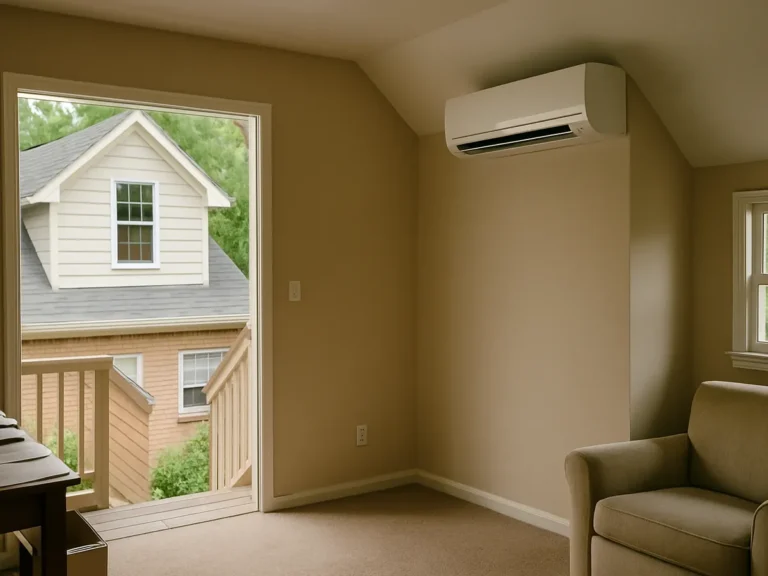
No Ductwork in Your Older Marietta Home? What Ductless Mini-Splits Can Actually Do
Home Blog No Ductwork in Your Older Marietta Home? What Ductless Mi… Go No Ductwork in Your Older Marietta Home? What Ductless Mini-Splits Can Actually Do You have a finished attic, a bonus room over the garage, or an addition that often sits 10 to 15 degrees off the rest of the house, and the […]
Read the guide
What SEER Actually Measures and How Much Efficiency Your Marietta Home Needs
Home Blog What SEER Actually Measures and How Much Efficiency Your M… Go What SEER Actually Measures and How Much Efficiency Your Marietta Home Needs You have two AC replacement quotes sitting in front of you. One recommends a 14.3 SEER2 system, the other says 18 SEER2, and the salesperson says going even higher will […]
Read the guide
Replacing an AC System in an Older East Cobb Home: What Homeowners Need to Know
Learn how aging ductwork, home renovations, and improper sizing can affect AC replacement. Discover what to check before installing a new system for better comfort.
Read the guide
