



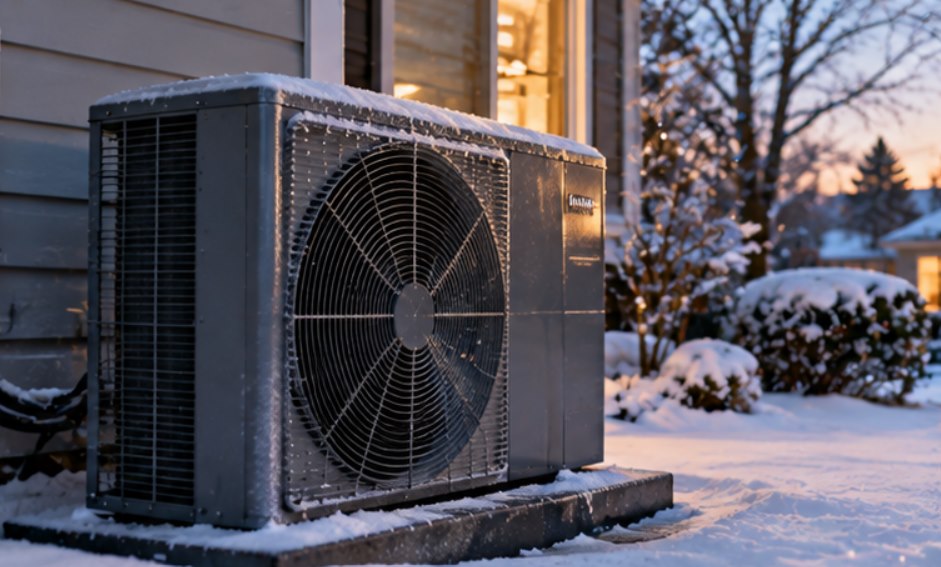

Your heat pump has been running since early morning, but it barely seems to shut off. If you live in Marietta, GA, this can happen when a winter cold front pushes temperatures toward freezing. A heat pump transfers heat from outdoor air into your home, so it may need longer heating cycles as outdoor temperatures fall.
The key question is whether your home stays warm. If your thermostat is set to 68°F but the indoor temperature keeps dropping, the outdoor unit remains coated in thick ice, or auxiliary heat runs for hours, the system may need attention. Understanding these signs helps you avoid unnecessary worry and recognize when a repair is justified.
Why Does a Heat Pump Run Constantly During Marietta's Winter?
Marietta's winter weather can change quickly. Mild afternoons in the 50s are common in January, but nights regularly drop near freezing, and an arctic cold front can push them into the teens. Those overnight drops increase heating demand while your home keeps losing heat through windows, exterior walls, attic spaces, and air leaks.
A heat pump moves available heat from outdoor air into your home. As the temperature falls, its heating capacity generally decreases, depending on the model. The system may run longer to maintain your thermostat setting, especially if the house has drafty windows, insufficient attic insulation, or leaking ductwork. Long runtime alone does not mean your heat pump is failing. Use these five clues to judge whether the behavior deserves attention:
- Indoor temperature stays steady: Long heating cycles may be normal.
- Indoor temperature keeps falling: The system may not meet the home's heating demand.
- AUX appears briefly: Supplemental heat may be assisting during cold weather or defrost.
- AUX stays on for hours: Persistent operation may indicate excessive heating demand or a system problem.
- Thick ice keeps building up: The outdoor coil or defrost system may need inspection.
What Is Normal When a Heat Pump Runs in Cold Weather?
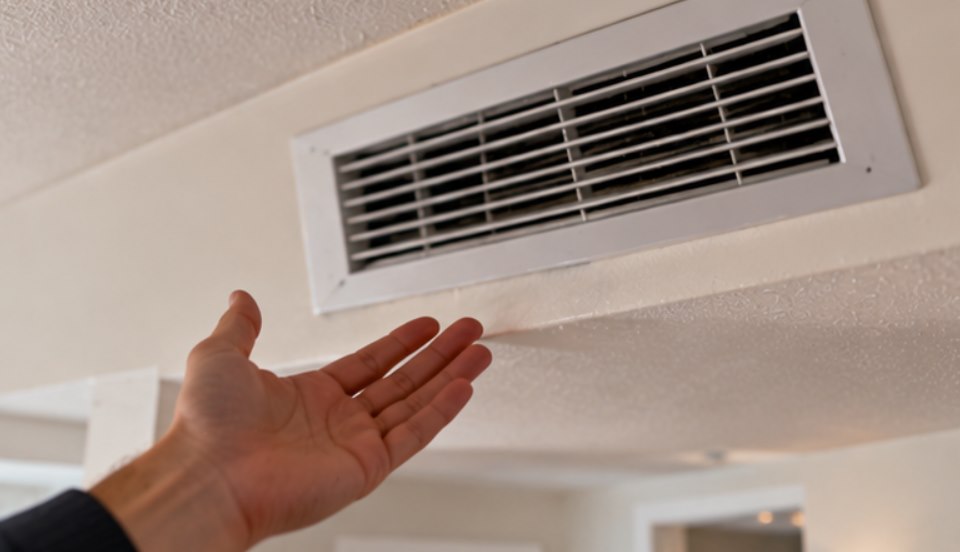
A heat pump does not always deliver the intense burst of hot air that homeowners associate with a gas furnace. Air from the vents is often around 90 to 110°F, depending on conditions, compared with 120°F or more from a gas furnace. Because the low end of that range is below body temperature, the air can feel cool on your hand even when the heat pump is working normally. If the system maintains the thermostat setting and rooms remain comfortable, this pattern can be normal.
Frost can also form on the outdoor coil during cold, damp weather. The system periodically enters a defrost cycle to melt that frost and restore heat transfer. During defrost, the outdoor fan may stop temporarily, water may drip beneath the unit, and steam may rise from the coil. Depending on the equipment, the air from indoor vents may briefly feel cooler.
| What you notice | What it may indicate |
|---|---|
| Long heating cycles while rooms stay comfortable | Normal operation during colder weather |
| Light frost that clears periodically | Normal defrost operation |
| Steam rising from the outdoor unit | Frost melting during defrost |
| Thick ice that remains on the coil | Possible defrost or airflow problem |
| Indoor temperature dropping despite continuous operation | Possible heating or equipment fault |
Do not chip ice away with tools or pour hot water over the outdoor unit, as this can damage components. If thick ice remains on the coil after a defrost cycle or blocks airflow, schedule a professional inspection.
Why Does My Thermostat Show AUX Heat?
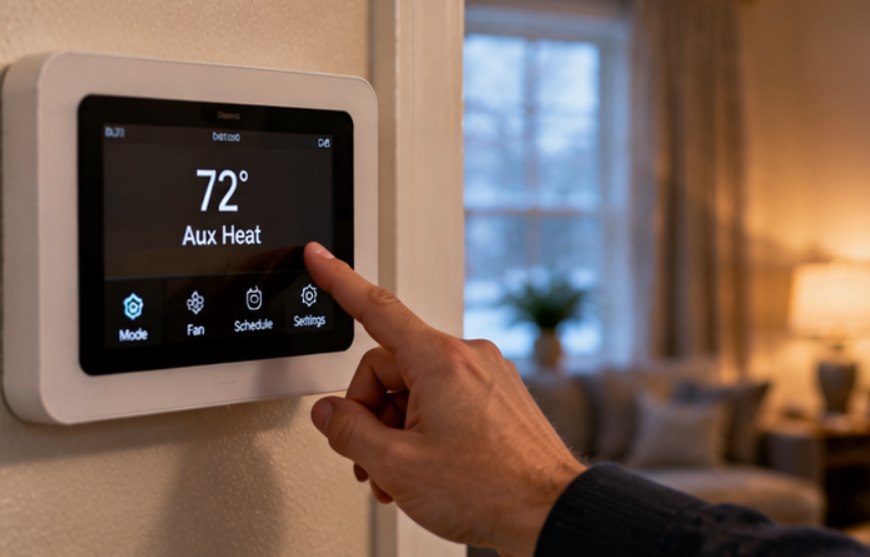
When your thermostat displays AUX, your system is using supplemental heat to help meet the home's heating demand. Many all-electric heat pumps use electric resistance heating elements, while dual-fuel systems may use a gas furnace. AUX can activate during colder weather, after a large thermostat adjustment, or during certain defrost cycles.
The cost concern is how long supplemental heat runs. Electric resistance heat uses electricity directly to produce heat, while a heat pump normally transfers heat from outdoors. If AUX remains on for much of the day, your electricity consumption may rise considerably, particularly if the home still cannot reach the set temperature.
Before assuming the system is broken, check these details:
- Did the outdoor temperature drop sharply overnight?
- Did someone raise the thermostat several degrees at once?
- Does AUX appear briefly or stay on for hours?
- Is the home reaching the requested temperature?
- Has electricity use increased alongside declining heating performance?
Emergency heat is different from AUX. You switch it on by hand, it shuts the outdoor heat pump off completely, and it heats the house with backup heat alone, which costs much more to run. Use it only as a stopgap if the outdoor unit has failed or is badly iced over, and call for service at the same time. Don't switch to it just because the heat pump is running continuously. If AUX stays on for extended periods during relatively mild weather, or the house remains cold, a technician should investigate the system.
What Can You Check Yourself Before Calling for Heat Pump Repair?
Before booking a service visit, check the items that can affect heating performance without opening the equipment. These five checks are especially useful during Marietta's winter cold snaps, when a dirty filter or blocked outdoor coil can make an already demanding heating cycle harder on the system.
1. Check the Thermostat Setting
Confirm the thermostat is set to Heat and compare the displayed room temperature with your target. Avoid raising the setting several degrees at once to force faster heating, as some systems activate auxiliary heat during recovery. If the thermostat shows an error code, record it before arranging service.
2. Inspect the Air Filter
A dirty filter restricts airflow through the indoor equipment. Check it monthly during periods of frequent heating and replace it when needed, following the manufacturer's instructions. Use the correct size and type for your system. If airflow remains weak after replacement, a blower, coil, or duct restriction may require professional diagnosis.
3. Clear Debris Around the Outdoor Unit
Marietta's falling leaves and wet winter weather can leave debris around outdoor equipment. Remove loose leaves and keep plants, stored items, and other obstructions away from the cabinet. Do not scrape ice from the coil or remove panels. If thick ice continues to cover the unit, arrange an inspection.
4. Check Supply Vents and Return Grilles
Make sure furniture, rugs, and curtains are not blocking supply registers or return grilles. Restricted airflow can leave bedrooms colder than living areas and may contribute to longer heating cycles. If one room remains cold after obstructions are removed, the cause may involve duct leakage, insulation, or airflow balancing.
5. Record the System's Behavior
Note the outdoor temperature, thermostat setting, indoor temperature, and whether AUX appears. Record unusual noises, repeated shutdowns, or ice that does not clear. These details help a technician distinguish normal operation during a cold spell from a system that cannot maintain the home's heating demand.
What Could Be Wrong if the Heat Pump Never Reaches the Set Temperature?
If the heat pump runs continuously but the house keeps getting colder, the problem may involve restricted airflow, a dirty outdoor coil, a refrigerant leak, a faulty defrost control, a reversing valve stuck in cooling mode, a failed outdoor fan motor, or a thermostat problem. A very common cold-night culprit is backup heat that has quietly stopped working, such as a failed heat strip or a tripped breaker for the strips. The heat pump keeps up on mild days, so nobody notices until the first hard freeze. The home itself can also contribute: air leaks, inadequate attic insulation, and leaking ducts allow heat to escape faster than the equipment can replace it.
Use this table to connect the symptoms you notice with the areas a technician may need to inspect. These are possible causes, not confirmed diagnoses.
| What you notice | Possible cause | What needs checking |
|---|---|---|
| Weak airflow from several vents | Dirty filter, blower issue, or duct restriction | Indoor airflow and equipment |
| Thick ice remains on the outdoor coil | Defrost fault or another equipment problem | Coil condition and defrost operation |
| AUX runs for hours while the home stays cold | High heating demand or system fault | Thermostat, backup heat, and heat pump performance |
| One bedroom stays colder than other rooms | Duct leakage, insulation gaps, or airflow imbalance | Ductwork and room-level heating needs |
| Electricity use rises sharply | Extended auxiliary heating or reduced system performance | Operating data and heating controls |
A technician should test the equipment before recommending refrigerant work, electrical repairs, or replacement. If your system struggles only during the coldest overnight periods, the assessment should also consider its rated heating capacity and the home's heat loss rather than assuming the equipment has failed.
When Should You Call a Heat Pump Technician?
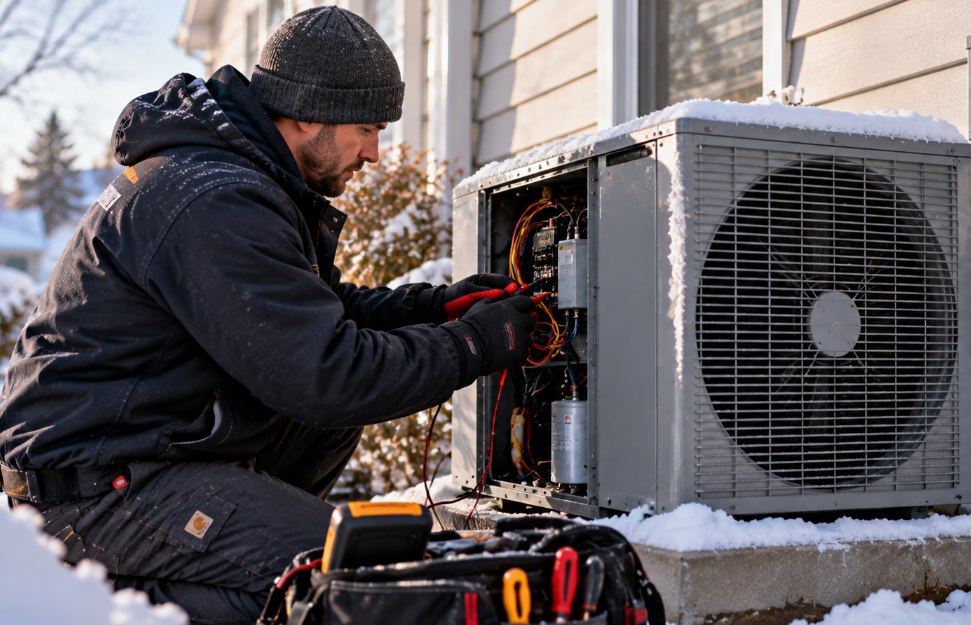
Do not wait for a complete breakdown if your home is losing heat during a cold spell. Arrange professional service when the indoor temperature continues falling despite extended operation, heavy ice remains after normal defrost cycles, or AUX runs for long periods alongside poor heating performance. Repeated shutdowns, tripped breakers, and new mechanical noises also warrant attention.
Turn the system off and seek professional guidance if you notice smoke, a burning electrical odor, or another immediate electrical hazard. Do not open electrical compartments, handle refrigerant lines, or repeatedly reset a breaker that trips. Those actions can create safety risks or worsen the underlying fault.
A professional inspection may include checking airflow, thermostat communication, electrical components, refrigerant performance, defrost controls, and supplemental heating operation. If the equipment is working correctly but the home still loses heat, ask whether leaky or undersized ductwork, insulation, or the system's sizing could be contributing. Many Atlanta-area heat pumps are sized for summer cooling, so backup heat is expected to carry part of the load on the coldest nights.
Why Choose Innovative Mechanical for Heat Pump Repair in Marietta, GA?
When your heat pump runs nonstop, you need to know whether it is responding normally to cold weather or struggling with a repair issue. We provide heat pump service in Marietta on all major brands, and as a Trane dealer, we can also help if your system is due for replacement. Owner Chad Ferguson has worked in HVAC since 1999, every technician is EPA 608 certified, and the company pays for NATE certification and factory training.
We use flat-rate pricing and explain our recommendations before proceeding. We do not perform repairs without your approval, and repairs come with a 30-day no-cost callback and one year of parts and labor on the same repair issue or part.
If your home will not reach the thermostat setting, AUX heat seems to run constantly, or thick ice keeps accumulating on the outdoor unit, call us at 770-726-7407, day or night. You'll talk through what the system is doing, and we'll tell you honestly when a technician can be there. If it isn't urgent, you can also send us a message.
Frequently Asked Questions
Is it normal for a heat pump to run all day in winter?
It can be normal during cold weather, as long as the house holds the temperature on the thermostat. A heat pump loses capacity as it gets colder outside, so it runs longer cycles to keep up. If indoor temperatures keep dropping, heavy ice stays on the outdoor coil, or AUX runs for hours, arrange an inspection to find the cause.
Should I turn off my heat pump when I see ice?
Light frost that clears during normal defrost cycles is expected, so there is no need to turn the system off. If thick ice keeps building up, covers the coil completely, or never clears after a defrost cycle, call an HVAC technician. Don't scrape the coil or pour hot water on it, because both can damage the fins and tubing.
Why does my heat pump blow cool air during defrost?
During defrost, the heat pump briefly reverses to send heat to the outdoor coil and melt the frost. While that happens, air from your vents can feel cooler for a few minutes unless backup heat covers the gap. If the air stays cool after defrost ends, or your home keeps losing heat, the system needs a diagnosis.
Does AUX heat mean my heat pump is broken?
No. Auxiliary heat is designed to help on cold days, after a large thermostat adjustment, and during defrost. It becomes a concern when it runs for hours in mild weather, when the house still won't reach the set temperature, or when your electric bill jumps sharply. Any of those is a good reason to have the system checked.
Why is my electric bill so high with a heat pump in winter?
The usual reason is backup heat running more than it should. Electric heat strips use far more power than the heat pump itself, so a dirty filter, a heavily iced coil, a large thermostat setback, or a heat pump that is low on refrigerant can push more of the work onto them. Steady thermostat settings help, and a technician can confirm what is driving the usage.
Keep reading
Guides and Honest Opinions
Furnace Smells Like Burning the First Time You Turn the Heat On? Here's What's Normal
Home Blog Furnace Smells Like Burning the First Time You Turn the H… Go Furnace Smells Like Burning the First Time You Turn the Heat On? Here's What's Normal The first time you turn on your furnace after months without heating, you may notice a dusty burning smell. If the odor is mild and fades […]
Read the guide
No Ductwork in Your Older Marietta Home? What Ductless Mini-Splits Can Actually Do
Home Blog No Ductwork in Your Older Marietta Home? What Ductless Mi… Go No Ductwork in Your Older Marietta Home? What Ductless Mini-Splits Can Actually Do You have a finished attic, a bonus room over the garage, or an addition that often sits 10 to 15 degrees off the rest of the house, and the […]
Read the guide
What SEER Actually Measures and How Much Efficiency Your Marietta Home Needs
Home Blog What SEER Actually Measures and How Much Efficiency Your M… Go What SEER Actually Measures and How Much Efficiency Your Marietta Home Needs You have two AC replacement quotes sitting in front of you. One recommends a 14.3 SEER2 system, the other says 18 SEER2, and the salesperson says going even higher will […]
Read the guide
Replacing an AC System in an Older East Cobb Home: What Homeowners Need to Know
Learn how aging ductwork, home renovations, and improper sizing can affect AC replacement. Discover what to check before installing a new system for better comfort.
Read the guide
Why Is My AC Running But Not Cooling? (A Marietta Homeowner's Guide)
Is your AC running but not cooling your home? Learn the most common causes, simple troubleshooting steps, and when to schedule professional AC repair in Marietta.
Read the guide
How Much Does AC Repair Cost in Marietta? (Diagnostic Fee Explained)
What drives AC repair cost in Marietta, what an HVAC diagnostic fee covers, and when repair still beats replacement. Contractor insights from Innovative Mechanical.
Read the guide
