




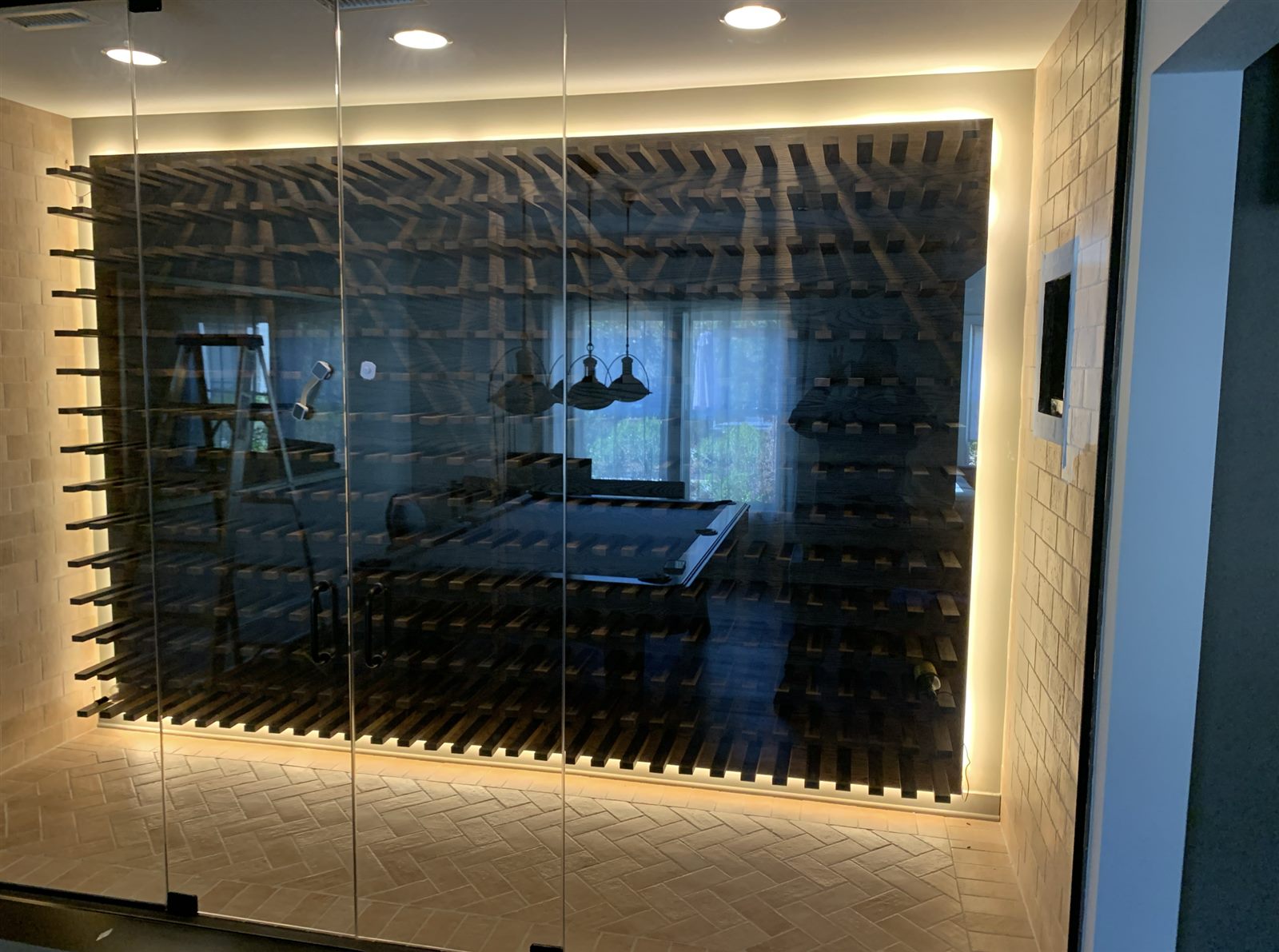
Wine Cellar CoolingServing Cobb, Cherokee, North Fulton, Paulding, Bartow & North DeKalb counties, GA
- Cellar Temperature, Held Steady
- NATE Certified Technicians
- 40+ Years Of Combined Experience
Tell us about your wine room
- Trane Authorized Dealer
- All Technicians NATE Certified
- Licensed and Insured
- 40+ Years Combined
- Lifetime Craftsmanship Warranty On Installs

Wine Needs Different Air Than You
Wine ages best in a room held near 55°F, with humidity high enough to keep corks moist. A home air conditioner is built for the opposite job. It cools living space into the low seventies and pulls moisture out as it runs. Across North Metro Atlanta, summer heat presses on a closet or basement cellar for months. That is why the room needs its own system.
Innovative Mechanical installs and services wine cellar cooling systems throughout our six counties. We look at the room, the heat it has to shed, and where that heat can go before recommending equipment.

- 55°F.The steady storage temperature Wine Spectator recommends for long-term cellaring.
- 70%.The humidity Wine Spectator pairs with it, so corks stay moist and the seal holds.
- 1,228 hours.The time Marietta spends above 80°F each year, per the Dobbins Air Reserve Base record.
- 110°F.The exhaust-side limit one manufacturer sets for its through-wall units, and summer attics here run hotter.
Your Cellar Warns You Before Your Wine Does
A wine cooling unit rarely fails without warning. The room gives signs first, usually in the hottest weeks of the year. Catching them early protects the bottles and often turns a replacement into a repair.
When a unit can be repaired, that is the advice you will get. When it cannot, we size the replacement to the room. Many cellars use a ductless split, which works much like the ductless mini-splits we install for living spaces.

The Room Drifts Above 60°F In Summer
An undersized unit or a low refrigerant charge cannot keep up with the heat coming in. Wine held that warm for weeks ages faster than it should.
The Unit Runs Almost Without Stopping
A blocked exhaust side or a dirty condenser coil leaves the heat with nowhere to go. Running nonstop also wears the compressor and pushes up the power bill.
Water Drips From The Unit Or Pools Below It
A clogged condensate line or drain pan is sending moisture back into the room. Left alone, that water stains racking and invites microbial growth on walls and labels.
Corks Look Dry, Or Labels Start To Peel
Humidity is swinging out of range, too dry for corks or too damp for labels. A dried-out cork lets air reach the wine, which is the slow damage a cellar exists to prevent.
Air Moves, But It Is No Longer Cold
A failed electrical start component or a refrigerant leak has stopped the cooling cycle. Because the fan keeps running, the problem is easy to miss until the room warms.
A Burning Odor, Or The Breaker Trips Repeatedly
Either one signals an electrical fault, so switch the unit off and call. Keep it off until a technician has checked the wiring and the compressor.

What Sets The Price Of Wine Cellar Cooling?
The room sets the price more than the equipment does. Its volume, its insulation, and how much glass it has all change the heat load. So does where the heat can go, whether into a nearby room, through ducts, or to an outdoor condenser.
So we see the room before we price it. You receive a written estimate naming the system, the work to run any refrigerant or drain lines, and the labor. Nothing is ordered until you have approved it.


Which Wine Cooling System Fits Your Cellar?
Through-Wall, Ducted, Or Split, Compared Side By Side
The right system is the simplest one that holds your room steady, and that is the one we will recommend. A larger or more complex unit is not automatically better. Here is how the three main types compare, including where each one falls short.
| What To Weigh | Through-Wall Unit | Ducted Self-Contained Unit | Split System |
|---|---|---|---|
| Where it sits | In the cellar wall | Outside the cellar, ducted in | Fan unit in or near the cellar, condenser outside |
| Where the heat goes | Into the room behind it | Into the space where the unit sits | Outdoors, through a refrigerant line |
| Noise in the cellar | The most of the three | Low, the unit sits elsewhere | Lowest, the compressor is outside |
| Best fit | Smaller cellars beside a large, cool room | Cellars where no wall can take a unit | Larger or finished rooms, and hot exhaust spaces |
| Installation | The simplest of the three | Needs duct runs planned in | Needs a certified HVAC technician for the refrigerant work |
| Where it falls short | Struggles when the room behind it gets hot | Needs space and a path for ducts | Highest installed cost of the three |

Why An HVAC Contractor Should Cool Your Cellar
A Wine Unit Is A Refrigeration System
Split Systems Need A Certified Technician
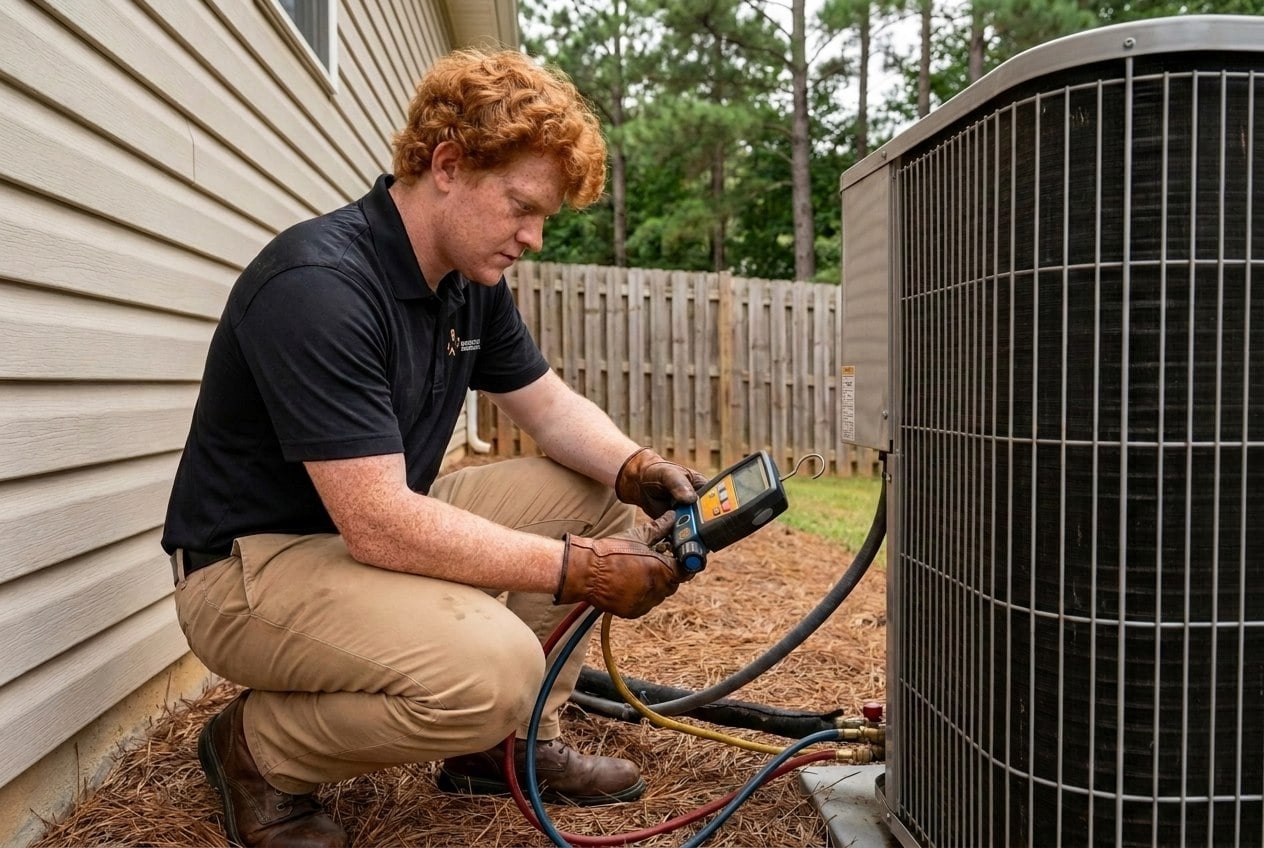
A split wine system runs refrigerant lines between the cellar unit and an outdoor condenser. Manufacturers require a certified HVAC technician to install it, and some will not activate the warranty without that technician's checklist. Our NATE-certified technicians run, test, and charge those lines as part of the job.
The Room Gets Checked Before The Unit
No cooling unit can hold a room that leaks heat and moisture. We look at the insulation, the vapor barrier, the door seal, and the glass before recommending equipment. If the room needs work first, you hear that before anything is ordered.
One Company For The Cellar And The House
The technicians who service your home's air conditioning and heating can service the cellar unit too. That means one call for every cooling system in the house, from the attic to the wine room. Every one of those systems gets the same 40+ years of combined experience.
How A Wine Cellar Cooling Project Runs
Four steps, and the room is assessed before any equipment is chosen.

- 1
Contact Us & We’ll Listen
Tell us the room size and whether it is built or still being planned. Mention any unit already in place. Photos of the space help as well.
- 2
Professional Evaluation
A technician measures the room and checks its insulation, vapor barrier, door, and glass. We also look at where heat can be exhausted and where a condenser could sit.
- 3
Honest Recommendations
You hear which system type suits the room and why. The written estimate lists the equipment, the line and drain work, and the labor, and the decision stays yours.
- 4
Relax
We install the system and run it until the room settles near its target. Before leaving, we show you the controls and how to read temperature and humidity.
Send Us a Message
Planning A New Wine Room?
Call Before The Walls Are Closed
The best time to plan the cooling is before the drywall goes up. Refrigerant and drain lines are far easier to route through open framing. The vapor barrier also belongs on the warm side of the wall. That is hard to fix once the drywall is up.
What Helps Us Plan
The room's dimensions, the amount of glass, and what sits on the other side of each wall. A rough floor plan or a few photos tell us a great deal.
Already Have A Unit That Struggles?
Tell us the brand, how old it is, and how warm the room gets in July. That is enough to know whether the fix is the unit or the room.
Where We Cool Wine Rooms
Wine room work starts in Marietta and reaches across Cobb County. From there, our technicians cover Cherokee, North Fulton, DeKalb north of I-20, Paulding, and Bartow. Every cellar gets the same assessment of the room before any equipment is chosen. Near a county line? One call confirms it.
Service Areas
Bartow County
Cartersville • Emerson
Cherokee County
Canton • Holly Springs • Woodstock
Cobb County
Acworth • Austell • Kennesaw • Mableton • Marietta • Powder Springs • Smyrna
DeKalb County
Atlanta (north of I-20) • Avondale Estates • Brookhaven • Chamblee • Clarkston • Doraville • Dunwoody • Lithonia • Pine Lake • Tucker
North Fulton County
Alpharetta • Johns Creek • Milton • Roswell • Sandy Springs
Paulding County
Dallas • Hiram

Reviews
“One of the most reliable small businesses I've ever worked with… They never tried to upsell me or pushed me to sign maintenance contracts. The technician was on time, communicated with me on every step, and was really careful to leave my house in pristine condition — and extremely gentle with my pets.”
“Great service and fair price. I had the opportunity to meet the owner Chad and he is running a very strong organization. His employees are well trained and the pricing is very fair.”
“This was the second time that I have counted on Chad and his team for their quick response, professionalism, speedy repair and honesty! I highly recommend!”
“Quick service. Very professional. More than fair pricing. Refreshing to have a company doing honest work at affordable prices. Great company!”
“This company was recommended to me and I don't regret it. They are very punctual and do a great job. The price also seemed very reasonable to me.”

Frequently Asked Questions

01Can I cool a wine cellar with my home air conditioner?
Not well. A home system is designed to cool living space, and most cannot hold a room at 55°F. It also removes moisture as it runs, which dries out corks over time. A wine cooling unit is built to hold a cellar cold while keeping humidity in range.
02Does a wine cellar need to be cooled?
Only if the room cannot hold close to 55°F on its own, and few rooms here can. Summer heat here reaches closets and basements alike. Without a dedicated system, the temperature climbs through the warm months. Those seasonal swings are harder on wine than a steady room.
03Does a wine cellar need a vapor barrier?
Yes. A cellar is colder and often more humid than the rooms around it. Without a vapor barrier on the warm side, moisture moves into the walls and condenses there. That leads to damp insulation, microbial growth, and a unit that has to work harder.
04Why is my wine cellar cooling unit icing up?
Ice on the coil usually means the unit is short of airflow or refrigerant. A blocked return grille, a failing fan, or a slow refrigerant leak can all cause it. A thermostat set below the unit's rated range can do it too. Switch the unit off to thaw, then call us.
05Can a wine cellar be built in a garage or attic?
It can be done, but both spaces get very hot here in summer. A through-wall unit venting into a hot garage loses much of its cooling. A split system with its condenser outdoors usually handles these spaces better. Expect heavier insulation than a basement room needs, too.
